04 June 2012

Tromping in the mud and kissing baby crocodiles

The last two months have been filled with lots of traveling and celebration...and a little bit of tromping in the mud. 

In April, I visited Oaxaca (both the coast and the city), Mexico City (for an MCC Mexico retreat), the indigenous community of Santa Rita, Ocosingo (for an INESIN workshop) and, more recently, the Chiapanecan coast (where I sweated buckets, ate mangoes in the ocean and took copious amounts of photos of aquatic animals). 

San Cristobal's rip-roaring fair came to town following Holy Week's festivities. INESIN celebrated its fifteenth anniversary in early May (click here to see photos), and perhaps more importantly (at least to many Mexicans), I spent Mother's Day in Tuxtla with my family. Two MCCers also recently celebrated birthdays. 

As of yesterday, the realization that I have just five and half weeks left in San Cristobal hit me hard. I hope that my rapidly-dwindling time is filled with as much life as my last few months...and a healthy amount of time getting dirty. 

1. Food

Though at moments Mexico and the United States feel worlds apart, no fair, whether here or there, is complete without a fried products stand
Feria de la Primavera y la Paz, San Cristòbal
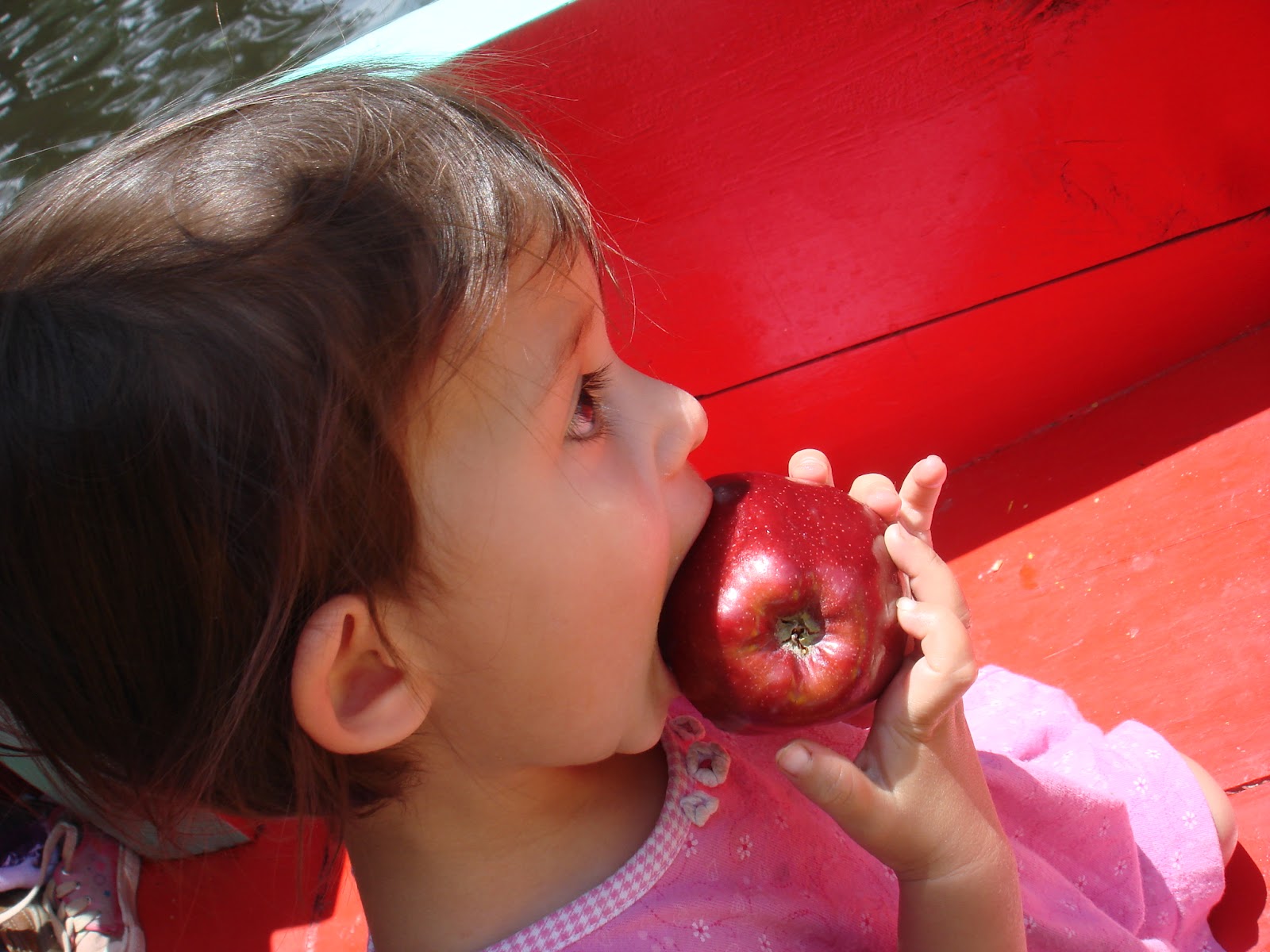
Luckily, the youngest among us know what it means to eat healthily.
Sofia on the Canals of Xochimilco, Mexico City, MCC Mexico Retreat
Hilary eating "a little, but a lot" of her apple
Annalisa came to visit! We went to the beach and caught some fishies that became our lunch.
Puerto Escondido, Oaxaca
GIANT TLAYUDA!
Oaxaca, Oaxaca
Chihuahua wants to eat GIANT TLAYUDA!
Graciela`s (my host aunt) beloved pet. Also known to eat copius quantities of Maria cookies.
2. Family

We celebrated Mother`s Day (May 10) with Liliana`s family at a balenario (restaurant/pool)...it`s pretty hot in Tuxtla
Liliana, Graciela, Tìo Rodolfo, Abueltia Bertita, Abue Fer
Eduardo, trying not to drown in the deep water.

3. Friends


Some nice Mexicans invited us for a sunset boat ride at the end of a hot day at the beach.
Puerto Escondido, Oaxaca
In addition to people-friends, we made animal-friends: TURTLE!
CRAB!
Celebrating Nov-Apr birthdays at the MCC Mexico office
MCC Mexico retreat, Mexico City
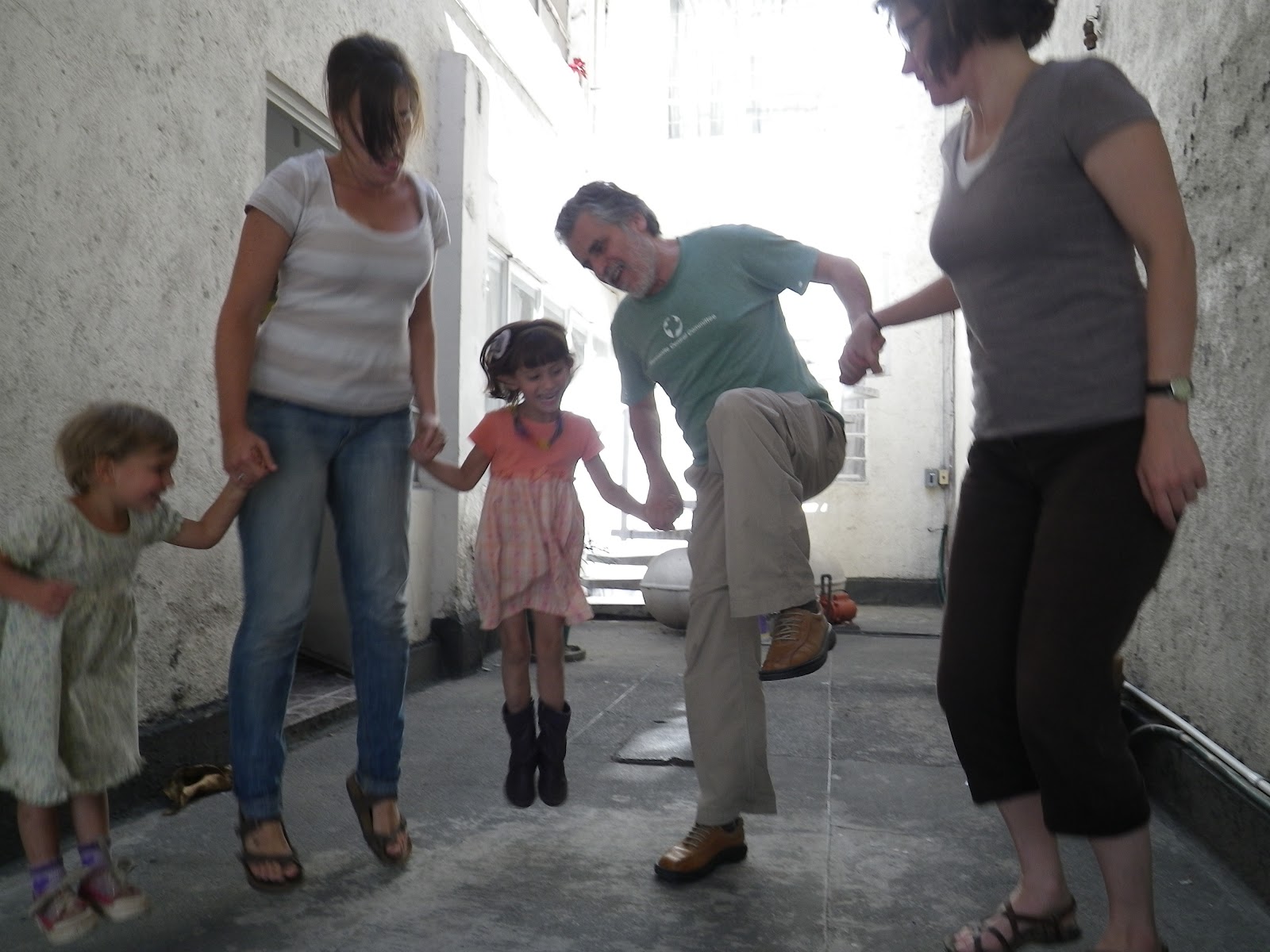
The four youngest female team members :)
Photo courtesy of Miriam Harder
Ready for a day on the Canals of Xochimilco, the last remanats of the Aztec empire built on land that is now Mexico City, but was once completely covered in water
Arturo (or as Sofia calls him, Tulo)! You`re not really jumping!
Foto courtesy of MH
Isabel
MH
A day at Lagos de Colòn with Elena and other participants in INESIN`s course on Pastoral Accompaniment in Situations of Domestic Violence.
Last weekend, I went to the beach and made LOTS of new baby friends! This is baby crocodile.
Puerto Arista, Chiapas (MH)
Baby turtles
Turtle Sanctuary, Puerto Arista MH
Other baby turtle!
MH
Mangoes at the beach with Dario, Sara, Joaquim and Miriam
Boca del Cielo, Chiapas
Here's to the next two months...

...and to more mud-tromping!
Making adobe out of dirt, water and pine needles for my co-worker Mariana's ecological house-in-progress

11 May 2012

Celebrating 15 Years of Constructing Peace in Violent Contexts

Last weekend, INESIN celebrated its 15th anniversary and I wrote a brief (less than 700 words, for a change) blog post sharing a bit of the experience and a few photos for the website. 

You can read my reflection in English or in Spanish

Click here to see a photo gallery featuring the weekend´s festivities.

14 April 2012

Eight months and counting...

A few weeks ago, Emily North, pastor of Shalom Mennonite (the congregation that I still consider my church home though I haven`t attended regurlarly for five years), asked me to write a reflection to share with my church family. This felt like a good excercise for me as Wednesday marked eight months since this adventure began. Here is my best attempt to sum up where I´ve been, where I am and where I`m going at this moment in my proyecto vida, my life project as my co-workers love to refer to this crazy journey we call life.

A few things I`ve discovered:
  • My Spanish will not be perfect by the end of this year. 
  • Mexico is beautiful: the varied landscapes; the man who monitors the comings and goings in my neighborhood, who I pass every day with an "adios;" the slugs that climb along the wooden beams at INESIN; the varied colors I soak in strolling through the artisan market; the unending hospitality.
  • Mexico is ugly: there`s trash everywhere; many soldiers are less-than-kind to immigrants; the government abuses its power; poverty and violence abound.
  • The U.S. (government) is ugly. Many Mexicans don´t look fondly upon my country of origin: our government is culpable in the increase in violence here as we`ve imported many heavy arms to fight the "war on drugs;" our immigration policy makes life difficult for many Mexican immigrants; foreign trade policy has brought economic hardship upon many small-scale Mexican farmers.   
  • The U.S. is beautiful, too. It´s always been easier for me to be critical than supportive of my country, but this year I find more and more to love about the place I´ve lived almost all of my life: the grand diversity; the (respective) acceptance of this diversity; the (again respective) opportunities and celebration of women; above all, it`s my home and the home of so many people I love. 
  • I desperately need this experience and those who I have had the privilege to meet along the way. In response to a progress report I wrote for MCC Mexico in January, Marion (one of the Country Reps) shared the following wisdom with me: "we are called to go to the ends of the earth, not because people there need us, but because we need them and what they teach us." I do believe that I´m contributing to the lives of those I interact with herein small ways: through my work at INESIN, through my openness to the traditions, values and lifestyles of others, through sharing my traditions, values and lifestyles. However, in the end, the person most changed by my year here will be me and those changes will be due, in a large part, to these people.
A few things I still hope to discover: 
  • Though since a young age I´ve been inexplicably drawn to Latin America, I have yet to put my finger on exactly what it is that draws me to this place and that keeps me dreaming about returning.I`m going to work more diligently to put my finger on it. Stay tuned...
  • How to speak French. Yes, this is a weird one given the fact that I´m in Mexico. Ironically, I never had an interest in learning until I came. This new development is partly due to several French-speaking friends, partly due to the fact that I now feel confident enough with my Spanish that I think my brain can handle French and partly because after Spanish, French can´t be that hard, right? There is a French school here in San Cristóbal, but unfortunately, I don´t think my personal $74 a month will handle these classes.
  • Basically everything having to do with God. This year has been a time for me to more intentionally focus on my faith, but every time something falls into place for me, at least five new uncertainties pop up.  

    What makes me laugh:
  • My host brother whose latest obsession is criticizing us at the lunch table if we ever talk with our mouths full (which usually happens at least 7 times a meal) and has taken to gesturing wildly to communicate when he has something to say, but is still working on his last bite of tortilla or beans.
  • My fellow MCCer Miriam (as we discussed this reflection, I told her I was going to list her under the category "what scares me", but decided that in all honesty, she fits better here :). We laugh about almost everything, but I think our favorite topic of late has been "crazy things Latino men say to gringas."
  • The little sheep that grazes outside of my neighbor´s house.

Where my expectations have been wildly surpassed:
  • The food. Two kilos gained last time I checked, and that was a few months ago...
  • The MCC community in San Cristóbal. At the Mesoamerica retreat in Guatemala this January, several MCCers from other countries asked me, "is it hard being the only SALTer in Mexico?" My response? an unequivocal "no." I´d much rather be the only SALTer with the Blocks and Miriam living just down the street than with five other SALTers spread across the country.
  • The salsa dancing. I´m starting to sound like a broken record on this one, but I CANNOT get enough of it.

Where my expectations haven`t been realized:
  • I (unrealistically) thought I´d leave this experience as an expert on all-things-Mexico. Not going to happen. In some ways, it´s like my God conundrum: every time I discover something new about the context of this vast country, another complexity emerges and leaves me with more questions than answers.
  • copy/paste my earlier comment on not leaving Mexico speaking perfect Spanish. However, I will take a whole slew of Mexican slang with me. And I find that super ,chingón.

My biggest struggle:
  • Balancing my worlds. For the last four years my worlds have been Goshen College and Harrisonburg, VA. In each of these places, I had fairly set and tight social and familial circles. All of the sudden, I´ve jumped into a world where I have many different (and primarily disconnected) communities. My host family doesn´t know my friends, many of my friends don´t know each other and certainly don´t know my coworkers, who clearly don´t know my friends or family from back home. Figuring out how to live between these disconnected realities (and be a true version of myself even though each brings out a different part of me) is not easy.

My biggest triumph:
  • The realization that not once have I regretted my decision to embark on this journey. I have an ever-present sense that this is exactly where I need to be right now. 

What scares me:
  • The future. Coming in, I knew that figuring out what to do with myself at the end of my time here would be much harder than the decision to come. I also told myself that in April I would begin to seriously explore options for next year. That time has arrived and I have no idea where next year will find me or what I´ll be doing. I know that my time in San Cristóbal is coming to a close, and I feel very much at peace with that, but otherwise, come July 24, many aspects of my life are shrouded in mist.

What gives me hope:
  • The love and support I´ve felt from many back home throughout this journey.
  • The music I´ve discovered.
  • The smallness of the world. Marie, one of my friends, tells me that the world is small for those who care for each other. I believe it. I´ve seen so many people caring for each other in amazing ways this year. I`ve come to care for many, too and have felt that love reciprocated in profound ways. This has been a constant comfort as I find myself far away from what I always considered "home," and it continues to comfort me as I slowly begin to look toward a future away from this place I currently consider "home."

22 March 2012

a story

Sometimes in life, you think you're heading to a certain destination, but you suddenly find yourself traveling to another.
[January, en route to MCC Mesoamerica retreat]
And on your way to this destination, some things will be familiar.
[My image of Guatemala at age 10: Crush soda, chicken buses and Gallo beer
below: tamales with Keila and Rachael, SALTers currently in Honduras and Costa Rica]
And it's good to make the most of this new and unexpected turn of events.
[With Isabel]

You might even love it...

...but you´ll know deep down, that another place has your heart for the moment
[Hilary, 3]
That other place is more than a physical location, it's people too.
[MCC Mexico. Small but mighty. And interestingly, the only MCC team in Mesoamerica to have children under the age of 7.]
So you'll go back home.
[Graffiti in San Cristobal] 

You'll eat,
[My host family is convinced they've been eating more healthily since I arrived...I'm not convinced :)
Hilary's 3rd birthday party]
play,
[Yami and Nicole, daughters of Cristy, who cleans our house every Friday.]

Work.
[Beet and bean seeds for planting INESIN's garden.]


The work won't be so bad when you're having fun.
[Elena, Natanael and Dario; planting INESIN's garden]
For a while, being at home is great. But sometimes you have to push your boundaries again...
[Cacti grove at Mayan ruins of Tonina]
...and step into the danger zone.
[Chiapa del Corzo fair
below: while this one might not look as dangerous, don't be fooled. To reach this bell, I had to walk across a grate above a 50 m drop and according to my host grandmother, if women enter Catholic bell towers, the bells will crack. And those things are NOT light.]

Danger zones imply risk and on new adventures you might risk breaking your favorite sunglasses,...
[Day trip to Toniná]
...but there are moments that make the risk worth taking.
[Oldest tree along the Rio Grijalva, Chiapa del Corzo]
When the wonder you inevitably experience isn't inspired by nature, it might be sparked when you're reminded of how small the world is.
[Representing Ohio State and San Francisco Community College in southern Mexico; Jaguares vs. Estudiantes soccer match, Tuxtla]
Along the way, you'll realize that there is a lot you don't know.
[yes, even though I attended a Mennonite college, I understand close to nothing about soccer]
But one thing you do know: along the way, you'll meet new friends...
[Huixtán]
...which makes you happy.
So happy, that the fact you might find yourself perched atop a decapitation altar doesn't even freak you out that much.
[Toniná]
On your adventures, you might also explore caves with exits that look like the state of Chiapas...
...or find the perfect leaves for steaming tamales...
...or meet someone who loves your new sunglasses almost as much as you loved the ones that broke.
As you take all of the beauty around you in, you will probably need to pinch yourself a few times.
[Huixtán]
After assuring yourself that you really are awake,...
[Elena's nieces and nephews after a rousing game of "duck, duck, deer"]
...you'll remind yourself to hold onto every. fleeting. moment...
...because like the grasshopper perched on your finger, you can't hold on forever.
[With Elena's Tzotzil-speaking niece and grasshopper. Communication was limited by the fact that I don't speak Tzotzil or grasshopper.]
Soon you'll be back in familiar territory once again, if only for a week...
[Mom and Dad visit]
...with the food,...
[lunch at Lagos de Montebello...meeting Dad's request of eating as much authentic food as possible]
...and the people you've always loved.
[Cathedral in San Juan Chamula]
Don't get too comfortable, though. When you think you finally know what to expect, you might suddenly find yourself in the middle of a herd of cattle.
[On the way to Sima de las Cotorras]

29 February 2012

The Giant Cosmic Lottery

There are moments when life seems so surreal that you think you must be observing someone else´s from a great distance...that it can´t be your own. I seem to be experiencing many such moments this year. The latter part of last weekend presented me with many chances to step back, take a deep breath and live deeply into these fleeting and oftentimes surreal moments.  

My most recent adventures began after an intense three days assisting with a workshop on Pastoral Accompaniment in Situations of Domestic Violence. After wrapping up the workshop and finally uploading INESIN´s new website (you can check it out here...don´t judge too much. This was my first foray into the world of website design and construction), I decided to take a personal day and traveled with two co-workers, Elena and Dario, to the municipality of Huixtán. Thursday morning found us walking into the parish where Elena worked prior to her time at INESIN. For me, Catholicism has always been shrouded in mystery: maybe it´s the insense that wafts through the cathedral during mass, maybe it´s the Latin, or maybe its because as a non-catholic partaking in the eucharist and making the sign of the cross are not done. Whatever it is, as I walked into the rectory living room (a place I had never imgained I would enter) and ate chips with the joke-cracking priests, I felt like I was peeking into a secret world. My amazement only continued as I jumped into the bed of a pick-up with them and trundled through the forest in search of a laguna which we found after at least an hour of searching.

Later that day, I sat by a river and lunched on roast chicken, rice, beans and handmade tortillas with Elena, Dario and four indigenous sisters (only one of whom spoke Spanish). We settled down to eat only after picking our way, barefoot, through a pitch black cave. In the evening we visited three of Elena´s friends, each in turn offering us coffee and sweet bread. As a rule, I never drink coffee after 6 pm and never willfully add sugar. I broke both self-imposed rules three times that evening in the spirit of accepting hospitality and because, let´s be honest, I´ve been getting far too attached to the daily combination of sweet bread dipped in coffee. I´m sure I will continue to compulsively coffee-dip any cookie, cracker or piece of bread within reach upon completion of my time here.

After crashing in the parish´s dormitory, Elena awoke Dario and me before 6 am to make the trek to her home. After descending from the highway a good 15 minutes on a steep, dirt trail, we reached Elena´s home. It was everything I imagined a Mexican campesino home would be: chickens heating themselves under a roaring fire in the kitchen, beans and fresh corn bubbling away in pots and a kitten weaving its way through my ankles. I even got to grind corn and flip tortillas on the hot comal. We spent the morning hiking through the Chiapanecan highland with Elena´s parents, brothers, sisters, nieces and nephews. We collected foliage for their rabbits, visited the recently planted corn and beans, hauled wood, shot shotguns, caught crabs and grasshoppers and then rested (quite sweatily) and finished off two three-liter bottles of Coke. After lunch, I spent the afternoon playing duck, duck, goose (I couldn´t remember how to say goose in Spanish, so the game became "duck, duck, deer") with the nieces and nephews. We didn´t always understand each other as I was communicating in Spanish and they, primarily in Tsotsil, but somehow between the sun, dirt, laughter and running, we became friends.

My adventure of a weekend continued on Saturday with a trip to Tuxtla Guitérrez (the capital of Chiapas) to watch my first professional soccer match. The Jaguares (Chiapas´ team and the one I root for along with Gabriel, much to Liliana and Eduard´s dismay due to the fact that they are avid Puma fans) won(!) and I left the stadium to the drumbeats of diehard fans. Saturday evening ended with the baptism party of a family friend. As I munched on tamales and sipped hot chocolate on a chilly patio, the reality of my last three days hit me like a brick. As I listed everything I had done, I realized that very few Mexicans would ever experience this unique combination of activities in such a short timeframe. Many living in communities don´t have the means to attend a professional soccer match (even with the rock-bottom $40 peso pricetag) and many Mexicans with the means to attend this sporting event wouldn´t choose to visit an indigenous community. Everything I experienced in these three days was a Mexican reality, but experiencing them all at once is certainly not common.

Since this weekend, I´ve been reflecting on the giant comic lottery that is life. What luck of the draw landed me in southern Mexico this weekend, seeing the sun-kissed mountains and the cast-aside Coke bottles, smelling the bay leaves and the horse poop, hearing the trickling stream and the roar of fanatic fútbol fans, braiding the thick black hair of Elena´s niece and licking the mole off my fingers? What luck of the draw gave me a birth family with significant economic resources and a home in one of the most "developed" nations of the world? Some would say it´s all part of God´s plan, but I´m more of a fan of the "giant cosmic lottery metaphor."  Yes, I believe that God is all around me, around each one of us. I believe God accompanies us in every step of our journey, but I think our circumstances stem from a variety of factors including a good dose of chance and context.

On Friday, as I hiked with Elena´s sister-in-law, Areceli (me in my tennis shoes and t-shirt, her in her heavy skirt and embrodered blouse), we got to chatting and she asked me how old I was. I responded that I had just turned 23 on December 2. She responded that her birthday, too, is December 2nd. Normally I refrain from asking Mexican women their age (it´s just not done here), but since she asked first and I got really excited about our shared birthday, I took the plunge. I don´t know what I was expecting (I´m a terrible judge of age), but 24 was certainly not it. This woman has a husband, three children, ages 7, 8, and 10 and all the responsibilites that go along with family life. When she revealed her age, I worked hard to keep my jaw from dropping to the floor. This woman and I share a birthday, but in so many ways our lives are radically different. The fact that she had her first child at 14 and I, at 23, have no plans of become a mother for at least five years blew my mind. Yes, I theoretically know that females can give birth at age 14. I know that in many cultures childbearing is expected much earlier than in the culture I come from. But this woman wasn´t a statistic; I played with her children, ate at her table and realized through the process that if one of us had been born in a different context, we could be good friends. But the giant cosmic lottery dealt us different hands. And we will both go our different ways, But I hope to see her again because I liked her and she told me that she loves to have visitors.

We´ll see if the giant cosmic lottery brings us together again. And maybe I´ll stack the cards a bit and make sure that it does.

19 February 2012

Knitting with chopsticks

I had many knitters in my life before I came to Mexico: my mom whose first knitting project from years ago was a washcloth that ended up stuffed in her bathroom closet; my aunt Terri who has nurtured my knitting soul, Elizabeth, who knows how to knit a uterus and Sher who sent me and Liliana and me enough yarn to keep us occupied until the end of my stay here.

And in the last months, many new knitters have been added to my life: Liliana who knits faster than anyone I´ve ever met; Elena, who´s teaching me the embroidery techniques from her community, San Gregorio Huixtán as I teach her to knit; Erendida who just went through her first chemotherapy treatment for breast cancer and still brings her knitting with her when she participates in workshops at INESIN; Doña Lucy, who is currently working on a sweater for her new baby grandson while the potatoes boil or the chicken roasts in INESIN´s kitchen. And then there´s Eduardo who doesn´t knit, but watches my progress intently and makes me laugh every time he calls my knitting needles "chopsticks."

I´ve realized recently, that knitting is not just something to keep my hands occupied when watching a movie or chatting. It´s also a powerful way for me to connect. I´ve been introduced to a bakery owner (also an avid knitter) who wants me to give her the pattern for a hat I made. I´ve spent rainy mornings sitting in the kitchen with Doña Lucy, exchanging knitting techniques. A few nights ago I introduced Liliana to the wonders of Ravelry, a social media website for knitters. Last week, Elena and huddled in the office after work to embroider, knit and talk.

Knitting has given me an instant connection with many people here. It has then proceeds to facilitate an even deeper connection, provides the space to discover commonalities and differences in a nonthreatening and organic way.

The women I´ve met here don´t use double-pointed needles and stitch Continental exclusively. I´ve yet to see them use a written pattern, something I fear to stray from. Their lives are quite different than mine in more significant ways, too. After all, I´m the youngest of the knitters I know here and we were raised in different cultures and speaking different languages. I´ve found that to fully appreciate differences, it helps to first find something that unites, because when you can see a piece of yourself in another, suddenly it becomes easier to rejoice in their triumps and refrain from instantly judging their flaws.

So when I experience moments here of feeling different, misunderstood or lonely, I´m going to remember to search for what unites us. And when I´m not, I´ll continue this search and also try to understand our differences and why they matter.

Either way, I´ll keep knitting because I really want to finish this pair of socks before my parents come in two weeks and it´s looking like I made a big mistake when I recently ripped out a big chunk. After all, it´s really hard to pick up the stiches with chopsticks.

06 February 2012

Immigration from another side of the border wall

In 2009, the U.S. census bureau reported that the U.S. has the 2nd largest Hispanic population in the world. (Can you guess who we followed? Yep. That would be Mexico.) Based on this information, I'll venture a wild guess that almost everyone who has lived in the U.S. for the past 23 years has interacted with Latin Americans in one context or another. I, of course, am no exception. Every day, Spanish could be heard ringing out though Harrisonburg High School's hallways. I served as a Spanish translator at Harrisonburg's Patchwork Pantry and Goshen's Center for Healing and Hope. Before coming to Mexico, I followed stories about detained immigrants and even had the chance to write a blog post about Pedro Guzman's celebrated release after 20 months in a Georgia detention center during my time as an intern at Witness for Peace this summer (you'll have to scroll down to the May 19 post to read my writing).

thanks jesus for this food de nadaThe "immigration issue" is everywhere and certaintly provokes strong emotions. There are many who would love nothing more to see all Latin American immigrants deported (I think of Goshen city council member Dixie Robinson, who I interviewed for a project in my Violence and Non-violence class during my last year at Goshen College). There are others who actively fight to help immigrants achieve the rights they deserve, and there are many who fall somewhere in between.  Needless to say, the issue is polarizing and complex. During my last few months here, I've seen (thank you Facebook) several interesting social commentaries that remind us of these complexities. A friend here in San Cristòbal shared an episode of South Park (a show I had never watched before) with me. "The Last of the Meheecans" provides a provocative (and crude) commentary about how the many of those with an "anti-immigrant" stance would respond if all Latin American immigrants returned to their country of origin. The above meme has been making its way around cyberland and speaks to the vital role many Latin Americans play in the cycle of U.S. food production and consumption.
And now, as I experience this issue from the other side of the border wall, complexity adds to complexity. From my current vantage point, I`m reminded that Mexico isn't only a country to be escaped, it's also a destination. This country receives many immigrants from other Latin American countires. The majority of Central American immigrants cross the border in Chiapas. The southern border of Mexico (a mere 2.5 hours drive from San Cristòbal) is overflowing with migration checkpoints and it is not uncommon to be riding on a combi near the southern border, only to have migration officials trudge on, ask for identification and yank off Central Americans who don't present proper identification. 

My experiences here have also reminded me that migration doesn't only change the composition of the U.S. Many Mexican's I've met here have family working in "the North." Those without documentation required by the U.S. face an incredibly dangerous journey if they want to return home. Many don`t. Last week my friend Tone told me about his uncle`s absence over Christmas because he`s currently living in L.A. Many Mexican immigrants don't want to leave their home and family, but many see no other opportunity to provide for their family. There are organizations working to address this reality. For example, one objective of INESIN's Strengthening Communities project, is to provide Mexican families with an alternative to migration through family gardens which provide both food for self consumption as well as a possible source of supplemental income. Though making a living through small-scale agriculture in Mexico became significantly more difficult after the introduction of NAFTA in 1994 (due to imported, subsidized grain from the U.S., among other factors), vegetable gardens provide one way for families to meet their basic need for food.

Of all the migration stories I've heard while here, Ivan's sticks with me the most. Christmas Eve found me on a bus to the airport in Tuxtla Gutierrez, capital of Chiapas. I was the only passenger as the bus wound its way down from the Chiapas highlands to tierra caliente. I spent the one hour+ bus ride, chatting with the driver, Ivan.  Like me, he was away from home that Christmas Eve. As we talked, he told me of the eight years he spent in Georgia working his way up the chain of command at IHOP.  Those years included two harrowing border crossings, one walking through the desert with the help of a coyote at age 16, the other four years later after a visit home, this time swimming. Ivan remembered his time in the U.S. with fondness. He considered his wage exceptional in comparison to what he would have been making in Mexico with only a high-school education. He made great friends. He even named his first daughter after an IHOP coworker. After the birth of his daughter, a few years back, he made the decision to stay in Mexico.  "She's my world," he told me. Now Ivan works as a bus driver for Mexico's OCC enterprise. He said it was the best work someone without a college degree could hope for and feels grateful for the work, even though his family lives over three hours away and the work doesn't permit him to get home as often as he would like. Ivan dreams of being an English teacher one day and I know he could do it even though I have no doubt that many of his students would end up with his Georgia twang. I hope he has the chance to realize his dream.

Hearing stories like this is one of the most powerful parts of my experience in Mexico. As is learning about immigration from this side of the border wall.